


How Laser Hair Removal Works
- vidantamedispa
- May 11
- 6 min read

Shaving every few days gets old fast, especially when the results are short-lived and the irritation is not. If you have ever wondered how laser hair removal works, the answer is more precise and more customized than most people expect.
Laser hair removal is not about burning hair off the skin. It is a controlled light-based treatment designed to target the hair follicle under the surface, where growth begins. When performed with the right technology and settings, it can significantly reduce unwanted hair while keeping surrounding skin protected.
How laser hair removal works on the skin
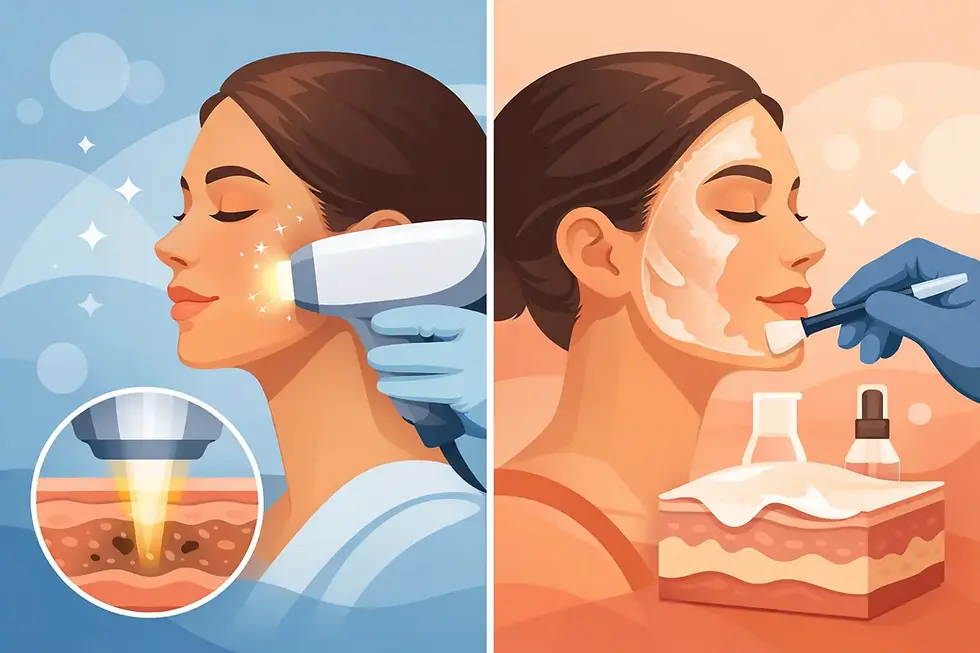
Laser hair removal uses concentrated light energy aimed at pigment in the hair. That pigment, called melanin, absorbs the light and converts it into heat. The heat travels down the hair shaft into the follicle, where it damages the structures responsible for future growth.
This is why darker, coarser hair often responds well. It contains more pigment for the laser to recognize. The skin itself also contains melanin, which is why treatment settings matter so much. A safe, effective session depends on choosing the right wavelength, energy level, and pulse duration for the client’s skin tone, hair color, and treatment area.
The goal is selective targeting. In other words, the laser should focus on the hair follicle while minimizing heat in the surrounding skin. That is where medical-grade technology and trained providers make a real difference. Laser hair removal is not one-size-fits-all, and it should never be treated that way.
Why multiple sessions are necessary
One of the biggest misconceptions is that laser hair removal removes every hair in a single appointment. In reality, hair grows in cycles, and the laser is most effective when hair is in the active growth phase, called anagen.
At any given time, only a portion of your hair is actively growing. Some follicles are resting, and others are transitioning between stages. Because of that, one treatment can only affect the hairs that are in the right phase at that moment. The remaining follicles need to be treated in future sessions as they re-enter active growth.
This is why most treatment plans involve a series of appointments spaced several weeks apart. Areas like the face may need a different schedule than areas like the legs, underarms, or bikini line because growth cycles vary by body region. Hormones also play a role, which is why some clients need maintenance sessions after their initial series.
That is not a sign the treatment failed. It is simply how hair biology works.
What the laser actually targets
The laser does not target hair above the skin. It targets the root system below it. During treatment, the hair inside the follicle acts almost like a conductor, carrying heat downward to the source.
This is also why clients are often asked to shave before treatment instead of waxing or tweezing. Shaving leaves the follicle intact under the skin, which gives the laser something to target. Waxing, threading, and tweezing remove the hair from the root, which can make the treatment less effective.
If you picture the follicle as a tiny factory producing hair, the laser’s job is to disrupt that factory. Some follicles are disabled completely. Others are weakened and produce finer, lighter regrowth over time. The end result is usually not just less hair, but softer and slower-growing hair as the series progresses.
Does laser hair removal work for every skin tone?
This is one of the most important questions, and the honest answer is that it depends on the technology being used and the experience of the provider.
Older laser systems were more limited and often worked best on light skin with dark hair because the contrast made targeting easier. Today, advanced systems can treat a much wider range of skin tones more safely and effectively when proper protocols are followed.
That said, customization is everything. Darker skin tones require careful parameter selection because there is more melanin in the skin itself. The wrong settings increase the risk of irritation, burns, or pigment changes. Lighter or finer hair can also be more challenging because there is less pigment for the laser to detect.
This is why a consultation matters. A qualified provider should assess your skin tone, hair type, medical history, sun exposure, and goals before recommending a plan. At a medical aesthetics practice like Vidanta Laser Spa, that personalized approach is part of making treatment both results-driven and safety-focused.
What treatment feels like
Most clients describe laser hair removal as a quick snapping or warming sensation. Some areas are easier than others. The underarms may feel different from the upper lip, and the bikini area is often more sensitive than the legs.
Modern devices often include cooling features to improve comfort and protect the skin during treatment. Sessions are also usually faster than people expect. Smaller areas can take just a few minutes, while larger areas naturally take longer.
Afterward, the skin may look slightly pink or feel warm for a short time, similar to mild sun exposure. That temporary reaction is common, but aftercare still matters. Your provider may recommend avoiding direct sun, heat, intense workouts, or harsh active skincare immediately after treatment, depending on the area.
What kind of results to expect
Laser hair removal is best understood as long-term hair reduction, not always total permanent removal of every single follicle forever. Many clients see a clear reduction in density, thickness, and regrowth speed after a series of treatments. Some areas respond exceptionally well and stay smooth for extended periods. Others may need occasional maintenance because of hormones, genetics, or the nature of the hair in that region.
That distinction matters because it sets realistic expectations. Good laser treatment does not promise magic. It offers measurable improvement with a plan built around your skin, hair, and goals.
For many people, the benefits go beyond convenience. Less shaving can mean fewer ingrown hairs, less razor burn, and less irritation. That is especially valuable in areas prone to friction or inflammation, such as the bikini line, neck, or underarms.
Who is a good candidate?
A good candidate is not defined by one skin tone or one hair type. The better question is whether your hair has enough pigment for the laser to target and whether your skin can be treated safely with the technology available.
In general, laser hair removal tends to be most effective on darker hair. White, gray, red, and very light blonde hair can be less responsive because there is limited pigment in the follicle. Hormonal conditions can also influence treatment outcomes, especially on the face.
This does not mean you are automatically not a candidate. It means your treatment plan should be based on an honest assessment, not a generic promise. A reputable provider will explain what kind of response is realistic before you begin.
Safety is not a small detail
Because laser hair removal uses heat and light, safety should never be treated as an afterthought. The quality of the device matters. So does the provider’s training. So does your pre- and post-care.
Recent tanning, certain medications, active skin irritation, and some medical conditions can affect whether treatment should be adjusted or delayed. Eye protection is essential. Patch testing may be recommended in some cases. The strongest results usually come from practices that take a conservative, customized approach rather than trying to rush intensity.
That might sound less flashy, but it is exactly what leads to better outcomes. In aesthetics, safe progress is smart progress.
How to get the most from your sessions
Preparation makes a difference. Clients are typically advised to shave the area before treatment, avoid tanning, and pause hair removal methods that pull from the root. Consistency matters too. Skipping sessions or waiting too long between appointments can slow progress because the treatment schedule is designed around the hair growth cycle.
It also helps to think in terms of a full plan rather than a single visit. Laser hair removal works best when your provider can track how your skin responds, adjust settings when needed, and time your sessions properly. That is part of why professional oversight matters so much.
For the right candidate, laser hair removal offers something shaving and waxing never really can - a more strategic way to manage unwanted hair with long-term results in mind. The smartest first step is not guessing which treatment is best. It is getting expert guidance that matches the technology to your skin, your hair, and your goals.


Comments