


Noninvasive Treatments for Loose Skin That Work
- vidantamedispa
- 11 minutes ago
- 5 min read

Loose skin can feel frustrating because it does not always respond to the habits that helped you feel healthier in the first place. Weight loss, pregnancy, sun exposure, and natural collagen loss can leave the face, neck, abdomen, arms, thighs, or knees looking less firm. The right noninvasive treatments for loose skin can help improve skin quality and visible laxity without surgical incisions or extended downtime, but the best choice depends on how much laxity is present and what result you want to see.
For mild to moderate looseness, technology-based treatments can stimulate the skin’s own renewal process. The goal is not to create an overnight surgical result. It is to encourage collagen remodeling, improve texture, and create a smoother, firmer-looking appearance over time.
Why Loose Skin Develops
Collagen and elastin are the structural proteins that give skin its bounce, density, and ability to retract. Beginning in adulthood, the body gradually produces less of both. UV exposure, smoking, repeated weight fluctuations, genetics, and hormonal changes can accelerate that process.
After significant weight loss, skin may not fully contract to match a smaller body shape. Similarly, pregnancy can stretch abdominal skin and change the appearance of the lower stomach. On the face and neck, laxity often shows up as softer jawline definition, fine crepey texture, or skin that no longer looks as lifted as it once did.
The degree of laxity matters. Non-surgical options are generally most effective when the skin still has some natural elasticity. When there is substantial excess skin or pronounced sagging, surgery may be the more predictable route for removing tissue. A professional consultation helps set realistic expectations before investing in any treatment plan.
How Noninvasive Treatments for Loose Skin Work
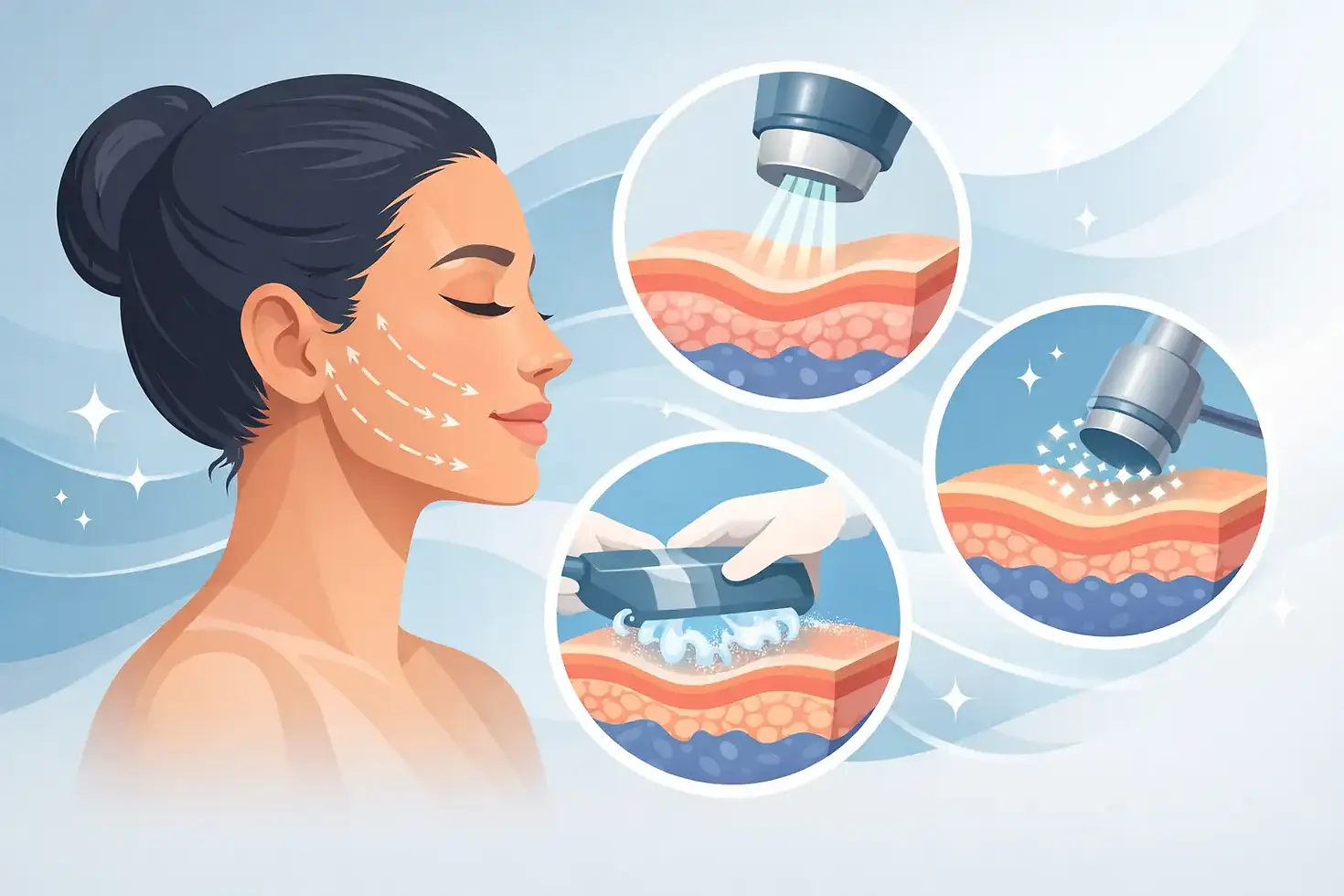
Most professional skin-tightening treatments use controlled energy to warm targeted layers of skin or create precise micro-injuries that trigger repair. In response, the body begins producing fresh collagen and reorganizing existing collagen fibers. This remodeling process is gradual, which is why results often continue to develop for several weeks or months.
A skilled provider adjusts treatment settings based on the area, skin thickness, concern, and skin type. This level of customization is particularly important for clients with deeper skin tones, sensitive skin, active acne, a history of pigmentation changes, or certain medical conditions. Safe treatment is never one-size-fits-all.
Radiofrequency Skin Tightening
Radiofrequency, often called RF, delivers heat beneath the skin’s surface to support collagen production and improve firmness. It can be used on areas such as the face, neck, abdomen, arms, thighs, and knees, depending on the technology and treatment plan.
Many clients choose RF because it involves little to no downtime. The treated area may look mildly pink or feel warm afterward, but most people return to regular activities quickly. Results are typically progressive, and a series of treatments is often recommended for a more visible change.
RF can be a strong option for early laxity, crepey texture, and skin that needs overall refinement rather than dramatic lifting. It may also complement body contouring goals by helping improve the quality of skin in an area where fat reduction alone would not address looseness.
RF Microneedling for Texture and Firmness
RF microneedling combines two proven approaches: microneedles create controlled channels in the skin, while radiofrequency energy is delivered at selected depths. This combination can address more than laxity. It may also improve acne scarring, enlarged pores, fine lines, uneven texture, and early signs of aging.
Because the treatment works below the surface while preserving much of the outer layer of skin, it can be an effective option for clients seeking meaningful collagen stimulation with manageable downtime. Redness and swelling are common in the short term, and post-treatment care matters. Your provider may recommend pausing active skincare ingredients, avoiding heat and intense exercise briefly, and using broad-spectrum sunscreen diligently.
Results build gradually as collagen remodels. For many concerns, a series spaced several weeks apart produces better improvement than a single session. RF microneedling is particularly valuable when loose skin comes with textural concerns, rather than laxity alone.
Body Contouring With Skin-Firming Benefits
Non-surgical body contouring is often associated with reducing localized fat, but some technologies can also support skin tightening. This distinction matters. Removing or shrinking fat cells may improve shape, yet skin laxity can become more noticeable if the overlying skin does not contract well.
For that reason, a customized body plan may pair contouring with radiofrequency-based tightening. The abdomen, upper arms, inner thighs, bra-line area, and knees are common areas of concern. The appropriate approach depends on whether the main issue is stubborn fat, loose skin, muscle definition, or a combination of all three.
A consultation should include an honest assessment of what noninvasive technology can accomplish. It is possible to improve contour and skin smoothness without surgery, but a provider should never promise that a device will duplicate the results of an arm lift, tummy tuck, or body lift.
What Results Can You Realistically Expect?
The most satisfying results tend to be subtle but meaningful: skin that looks smoother, more hydrated, slightly tighter, and more even in texture. On the face, this can translate to a fresher appearance and improved definition. On the body, it may mean less crepiness and a more refined contour in clothing.
Results vary based on age, genetics, sun exposure, skin quality, treatment area, and consistency with the recommended series. Someone in their 30s with mild abdominal laxity after pregnancy may respond differently than someone in their 50s with significant skin laxity after major weight loss. Neither concern is less valid, but they may call for different expectations and options.
Collagen production takes time. While some clients notice a temporary post-treatment firmness from swelling or tissue contraction, the more meaningful changes generally appear gradually. Maintenance treatments may help preserve results as natural aging continues.
Supporting Your Treatment Results at Home
Professional treatments do the heavy lifting, but daily habits influence how your skin looks and behaves. Consistent sunscreen use is essential, especially after collagen-stimulating procedures. UV exposure breaks down collagen and can worsen uneven tone, which works against the very results you are trying to build.
A well-chosen home skincare routine can also support texture and overall skin health. Depending on your skin and provider guidance, ingredients such as retinoids, antioxidants, peptides, and barrier-supporting moisturizers may be useful. Active products should be introduced thoughtfully, particularly around treatment dates, to avoid unnecessary irritation.
Stable weight, adequate protein intake, hydration, sleep, and avoiding smoking all support healthy skin function. These habits cannot replace in-clinic care, but they help protect the collagen you have and support your longer-term investment.
Choosing a Provider for Skin Tightening
Noninvasive does not mean casual. Energy-based treatments require proper assessment, appropriate settings, and a provider who understands skin biology and safety protocols. Ask what technology is being used, how many sessions are likely recommended, what downtime to expect, and whether the provider has experience treating your skin type and concern.
At Vidanta Laser Spa, personalized planning is central to choosing treatments that fit your skin, body goals, lifestyle, and comfort level. A consultation should feel educational, not pressured. You deserve clear answers about benefits, limitations, pricing, aftercare, and whether a non-surgical option is truly the right fit.
If loose skin is affecting your confidence, start with an expert assessment rather than a trending device or a promise of instant transformation. A carefully selected plan can help you make progress safely, see changes that look like you, and feel more comfortable in your skin over time.


Comments