


Does IPL Hurt? What Treatment Really Feels Like

A quick snap against the skin is the sensation most clients describe first. If you are asking, does IPL hurt, the honest answer is that it can be uncomfortable, but it is typically very manageable. IPL is not usually described as painful in the way waxing, injections, or an invasive procedure can be. With the right settings, preparation, and a qualified provider, most people tolerate it well.
IPL, or intense pulsed light, uses controlled light energy to target specific concerns in the skin. That may mean pigment in unwanted hair, visible sun spots, facial redness, or certain signs of photoaging. Because the light is converted into heat at the treatment target, some sensation is expected. Your experience should always be guided by a personalized assessment, not a one-size-fits-all setting.
Does IPL hurt during a treatment?
Many clients compare IPL to the quick flick of a rubber band, followed by a brief feeling of warmth. The feeling arrives and passes quickly with each pulse. On areas with coarse, dark hair, such as the underarms or bikini line, the sensation can be more noticeable because there is more pigment for the light to target. Finer hair on the arms or face may feel milder.
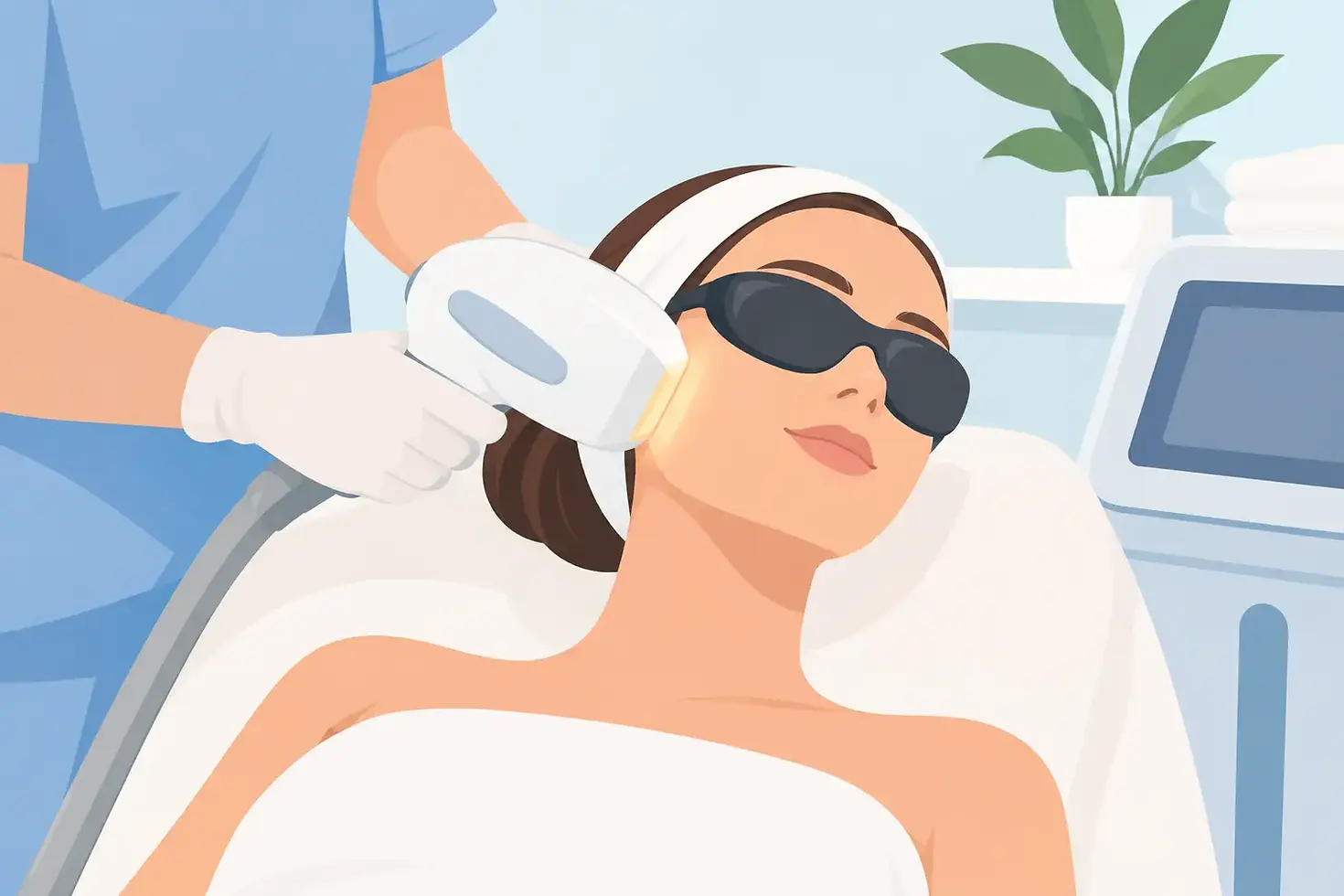
For IPL photofacials, treatments for concerns such as sun damage, uneven tone, and redness, the sensation is often a warm pinprick or a light snap. Certain areas can feel more sensitive, including the upper lip, chin, jawline, and skin close to the eyes. A skilled practitioner works methodically, checks in with you, and adjusts within safe treatment parameters when needed.
Comfort should never mean pushing through sharp or escalating pain. You may feel heat, stinging, or snapping during the pulse, but you should be able to communicate easily throughout your appointment. If a setting feels too intense, say so immediately. Your provider can reassess the area, your skin response, and the treatment plan.
IPL hair removal and IPL facials can feel different
IPL is used for more than one concern, so it helps to understand what you are booking. IPL hair reduction directs light toward melanin in the hair. Darker, denser hairs tend to absorb more energy, which can make the pulse feel stronger. Shaving before treatment is standard for many hair removal appointments because it keeps the light focused below the skin surface rather than on visible hair above it.
An IPL facial targets pigment or redness closer to the surface of the skin. You may feel concentrated warmth as the handpiece passes over areas with freckles, sun spots, or diffuse redness. It is common for pigment spots to look temporarily darker after treatment before they gradually flake away or fade. That visible response is not the same as an injury, but it is one reason aftercare and professional guidance matter.
The goal is not to use the highest possible energy. It is to choose settings that are appropriate for your skin tone, concern, recent sun exposure, medical history, and desired outcome. Effective IPL treatment balances visible results with skin safety.
What affects how much IPL hurts?
Your experience is personal, and several factors can change the level of discomfort. Treatment area, hair thickness, and the density of pigment all matter. Hormonal areas and sensitive zones may feel stronger than lower legs or forearms. If you are close to your menstrual cycle, you may also notice that your skin feels more reactive than usual.
Skin preparation plays a significant role. Recently tanned or sun-exposed skin can be more sensitive and may not be suitable for treatment. Self-tanner, active irritation, a sunburn, or certain topical products can also affect whether your appointment should proceed. Your provider may recommend pausing active skincare ingredients before treatment, depending on what you use and the service you are receiving.
Technology and technique matter just as much. Modern devices may use contact cooling, chilled tips, or other cooling measures to protect the skin and make the treatment more comfortable. A practitioner who understands different skin types knows that a careful approach is not a compromise. It is the foundation of a treatment that is both responsible and results-driven.
How to make IPL more comfortable
The best way to reduce discomfort begins before you arrive. Follow the pre-treatment instructions you receive, especially around sun exposure, skincare products, hair removal, and medications. Do not assume every product or prescription is compatible with IPL. Share your complete health history and any changes since your consultation so your provider can determine whether treatment is appropriate that day.
For IPL hair removal, shave the treatment area as directed, usually shortly before your appointment. Avoid waxing, tweezing, or epilating in the weeks leading up to treatment because the follicle needs to be present for light-based hair reduction to work. Arrive with clean skin that is free of lotion, deodorant, makeup, perfume, and self-tanner unless your provider has instructed otherwise.
During the appointment, slow breathing can make a real difference. It is tempting to tense up before every flash, especially on a first visit, but relaxing your shoulders and exhaling during pulses often helps. Ask your provider about cooling options and whether a short pause between sections would be helpful. At Vidanta Laser Spa, treatment planning is individualized, which means comfort and skin response are considered alongside your aesthetic goals.
Avoid applying numbing cream unless your provider specifically approves it. It may not be necessary, and some products can alter skin sensation or require special timing. An expert consultation is the right place to discuss any anxiety around discomfort and create a plan that feels realistic for you.
What does your skin feel like afterward?
Immediately after IPL, the skin may feel warm, similar to a mild sunburn. Temporary redness, slight swelling around follicles after hair removal, or a tight sensation can occur. These effects are generally short-lived, though recovery varies by treatment area, settings, and your individual skin.
Cool compresses and gentle, fragrance-free skincare can be soothing when recommended by your provider. Protecting treated skin from the sun is essential. Heat exposure from hot baths, saunas, strenuous exercise, and very hot showers may also be best avoided for the period your practitioner advises. For photofacial treatments, do not pick at darkened pigment or flaky areas. Let the skin complete its natural renewal process.
Your provider will give you specific aftercare instructions because post-treatment needs differ between hair removal and facial IPL. Following them closely helps support the outcome and lowers the chance of unnecessary irritation.
When discomfort is not normal
A brief snap during treatment and temporary warmth afterward can be expected. Severe pain, blistering, increasing swelling, pronounced crusting, or redness that worsens instead of settling deserves prompt professional attention. Contact your treatment provider for guidance rather than trying to treat a concerning reaction with strong products at home.
IPL is not right for every person, every skin concern, or every moment. Recent tanning, active infection, some medications, and certain medical conditions may mean postponing treatment or choosing another option. A thorough consultation protects your skin and helps set honest expectations before the first pulse is delivered.
The right IPL appointment should leave you feeling informed, cared for, and confident in the plan. A little warmth and a few quick snaps can be part of the process, but your comfort, safety, and long-term skin results should always lead the conversation.


Comments